1. Regional Market Overview
1.1 Geographic and Energy Strategic Position
Central Asia, comprising Kazakhstan, Uzbekistan, and Turkmenistan, represents one of the most promising oil and gas drilling markets globally. The Caspian Sea region holds estimated hydrocarbon reserves exceeding 40 billion barrels of oil equivalent, with Kazakhstan accounting for approximately 60% of regional reserves. The Belt and Road Initiative has intensified energy cooperation between China and Central Asian nations, creating substantial opportunities for Chinese drilling equipment exporters.
The region's drilling market benefits from favorable government policies, relatively low operational costs compared to Western standards, and growing demand for energy infrastructure development. Kazakhstan's Kashagan field development, Turkmenistan's Galkynysh gas project, and Uzbekistan's mature hydrocarbon exploration programs collectively drive equipment demand across diverse drilling applications from shallow well intervention to deep formation drilling.
1.2 Market Size and Growth Trajectory
The Central Asian drilling market was valued at approximately USD 4.8 billion in 2025, with compound annual growth rate (CAGR) projected at 6.2% through 2030. Kazakhstan dominates with 58% market share, followed by Uzbekistan at 27% and Turkmenistan at 15%. The upstream oil and gas sector continues attracting foreign investment, particularly from Russian, Chinese, and Western multinational corporations seeking to diversify energy supply sources.
| Country | Market Share 2025 | Projected Growth Rate | Key Development Areas |
|---|---|---|---|
| Kazakhstan | 58% | 7.1% CAGR | Kashagan, Tengiz, Karachaganak |
| Uzbekistan | 27% | 5.8% CAGR | Fergana Valley, Aral Sea region |
| Turkmenistan | 15% | 5.2% CAGR | Galkynysh, Dauletabad |
2. Country-Specific Market Analysis
2.1 Kazakhstan Drilling Market
Kazakhstan stands as the dominant drilling market in Central Asia, driven by major international oil company (IOC) investments in super-giant oil fields. The Tengizchevroil (TCO) joint venture continues expansion of the Tengiz field, requiring extensive drilling programs for both production wells and injection wells. Kashagan field, although facing operational challenges including high hydrogen sulfide content and hard rock formations, maintains robust drilling activity to reach plateau production targets.
Local content requirements under Kazakhstan's subsoil use legislation mandate that drilling contractors utilize locally manufactured equipment where possible. Chinese equipment manufacturers have gained competitive advantage through technology transfer agreements with Kazakhstani industrial partners. The government's "Third Modernization" initiative prioritizes oil and gas sector equipment localization, creating joint venture opportunities for foreign drilling equipment suppliers.
2.2 Uzbekistan Drilling Market
Uzbekistan's mature hydrocarbon basins require increasingly sophisticated drilling techniques to maintain production from depleting fields. The State Commission on Reserves has reported that over 70% of Uzbek oil fields have exceeded 50% depletion, necessitating enhanced recovery methods and workover drilling operations. This creates sustained demand for workover rigs, completion equipment, and directional drilling services.
The Fergana Valley region presents unique drilling challenges including high formation pressures, complex fault systems, and corrosive reservoir fluids. These technical requirements favor equipment suppliers offering advanced mud systems and corrosion-resistant tubular goods. Russian companies maintain significant market presence, though Chinese equipment has gained acceptance based on competitive pricing and acceptable quality standards for non-critical applications.
2.3 Turkmenistan Drilling Market
Turkmenistan's gas-dominated energy sector focuses on supplying natural gas to China via the Central Asia-China Gas Pipeline. The Galkynysh field, one of the world's largest gas fields, requires continuous drilling to support export commitments. State-owned Turkmenneft and Türkmengaz maintain control over drilling operations, with foreign participation limited to service contracts and equipment procurement.
The country's harsh continental climate, with temperatures ranging from -30°C in winter to +50°C in summer, imposes stringent requirements on drilling equipment cold-weather performance and heat dissipation systems. Sandstorm conditions during spring months affect drilling operations and equipment maintenance schedules. Chinese manufacturers have established supply channels through the China-Turkmenistan natural gas cooperation framework.
3. Competitive Landscape Analysis
3.1 International Competitors
The Central Asian drilling equipment market features competition from Russian, American, European, and Chinese manufacturers. Russian companies benefit from historical ties, established service networks, and Cyrillic documentation accessibility. American and European manufacturers dominate high-specification drilling rig segments, particularly for advanced directional drilling and managed pressure drilling applications. These competitors emphasize technology leadership and after-sales service capabilities.
Major international competitors include NOV (National Oilwell Varco), which supplies complete drilling packages for premium contracts; Baker Hughes and Schlumberger, providing directional drilling services and measurement-while-drilling (MWD) equipment; and Russian manufacturers such as Buryepez and Izhma, serving the mid-market segment with conventional drilling equipment. European suppliers face competitive pressure from Chinese manufacturers on price-sensitive standard equipment procurement.
3.2 Chinese Market Position
Chinese drilling equipment manufacturers have achieved significant market presence in Central Asia through competitive pricing, adequate technical performance, and favorable financing arrangements. Companies including SPT Energy, Honghua Group, and Yantai Jereh have secured contracts for drilling rigs, mud pumps, and wellhead equipment respectively. The China Export and Credit Insurance Corporation (Sinosure) provides buyer credit facilities that enhance Chinese equipment competitiveness against Western alternatives.
Strategic challenges for Chinese equipment suppliers include perception of lower reliability compared to Western equipment, limited local service networks, and language barriers in technical documentation. Addressing these challenges requires investment in local service centers, enhanced quality certification (API specifications), and personnel training programs for end-users. Successful market entry strategies have combined equipment supply with operator training and ongoing technical support contracts.
4. Investment Opportunity Assessment
4.1 High-Potential Market Segments
Analysis identifies three primary opportunity areas for drilling equipment suppliers: workover rig modernization programs in Uzbekistan, where aging Soviet-era equipment requires replacement; directional drilling services expansion in Kazakhstan, driven by field development complexity; and gas well drilling equipment for Turkmenistan's pipeline support infrastructure.
The workover rig segment presents particular opportunity due to the age profile of existing fleet inventory across all three countries. Most workover rigs in operation exceed 20 years of service, creating replacement demand driven by maintenance cost increases and regulatory compliance requirements. Chinese manufacturers offer competitive workover rig packages integrating truck-mounted rigs, wireline units, and coiled tubing equipment.
4.2 Entry Strategy Recommendations
Successful market entry requires establishing local partnerships with established trading companies or establishing joint ventures with local manufacturers. The Kazakhstan market favors direct engagement with major oil companies (MNCs) for new project equipment supply, while Turkmenistan and Uzbekistan markets operate primarily through government procurement channels and authorized local distributors.
Financing packages significantly influence purchasing decisions, with buyer credit facilities and supplier credit arrangements providing competitive advantage. Participation in regional industry exhibitions, including the Kazakhstan Oil and Gas Exhibition (KIOGE) and Uzbekistan Oil and Gas Exhibition (UzOilGas), provides market access and relationship-building opportunities. Technical seminars and equipment demonstrations at client facilities strengthen product positioning and technical credibility.
5. Risk Assessment and Mitigation
5.1 Political and Regulatory Risks
Investment in Central Asian drilling markets carries political risks including potential policy shifts affecting foreign ownership restrictions, currency fluctuation exposure, and intergovernmental relations affecting energy trade. Kazakhstan's 2017 subsoil code amendments introduced additional local content requirements that affect equipment procurement procedures. Turkmenistan's state-dominated economy limits commercial flexibility and creates payment risk in government contracts.
Currency risk management requires attention, as the Kazakh tenge, Uzbek som, and Turkmen manat exhibit varying degrees of volatility against hard currencies. Contract structures should incorporate currency adjustment mechanisms or hard currency payment clauses where possible. Political risk insurance through multilateral agencies (MIGA) or private insurers provides additional protection for significant investments.
5.2 Operational and Technical Risks
Technical risks in Central Asian drilling operations include H2S exposure in Kazakhstan's Kashagan and Karachaganak fields, requiring specialized equipment certification and operational procedures. Formation challenges vary significantly across the region, from hard crystalline basement rocks in the Caspian Depression to overpressured formations in the Fergana Valley. Equipment selection must consider formation-specific requirements including mud weight windows, bit selection, and casing program design.
Logistical challenges affect remote field operations, particularly in Turkmenistan where infrastructure limitations increase equipment delivery lead times. Spare parts availability and service technician access require proactive supply chain planning. Chinese equipment suppliers have addressed these challenges through warehouse stocking agreements with local partners and remote support capabilities using digital communication platforms.
6. Equipment Specifications and Requirements
6.1 Drilling Rig Requirements
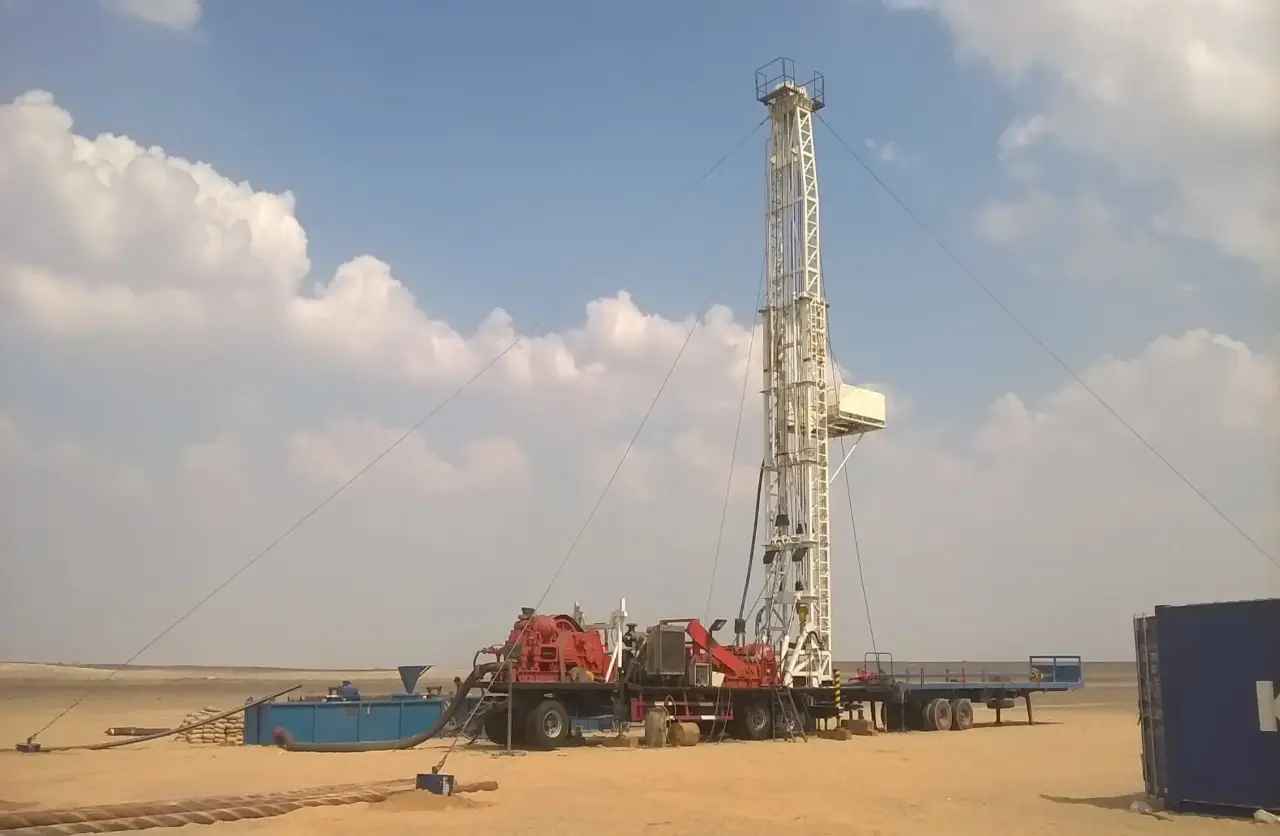
Land drilling rigs operating in Central Asia range from light workover units (50-150 HP) to heavy production drilling rigs (1500-2000 HP). The Kazakhstan market requires rigs meeting API and GOST standards, with instrumentation conforming to ATEX explosion-proof requirements for hazardous area operations. Rig automation systems increasingly specified include automated pipe handling, automatic tripping, and real-time drilling optimization software.
The table below summarizes typical drilling rig specifications across Central Asian applications:
| Rig Type | Depth Capacity | Application | Key Equipment |
|---|---|---|---|
| Light Workover | 1,500-3,000m | Well maintenance, re-entry | Trailer-mounted rig, work strings |
| Medium Drilling | 4,000-6,000m | Exploration, development | Truck-mounted rig, mud system |
| Heavy Production | 6,000-9,000m | Deep formation, HPHT | Skid-mounted rig, top drive |
6.2 Auxiliary Equipment Market
Auxiliary equipment demand includes mud pump packages, solid control systems, wellhead equipment, and downhole tools. Chinese manufacturers have achieved significant market share in mud pumps and solid control equipment through competitive pricing and adequate performance for standard drilling applications. Wellhead equipment remains dominated by premium international manufacturers due to critical safety requirements.
Downhole tools including drill bits, reamers, and drilling jars represent growth opportunities where Chinese manufacturers have improved product quality and established service networks. PDC bits from Chinese manufacturers have gained acceptance in softer formations typical of Turkmenistan gas wells. Drill pipe and drill collar suppliers face competition from Russian and Chinese mills offering regional pricing advantages.
7. Strategic Recommendations
7.1 Market Entry Prioritization
Kazakhstan should be prioritized for initial market entry given its larger market size, international operating environment, and established procurement channels. Entry strategy should target major IOC contractors for new project equipment supply while developing relationships with local service companies for aftermarket opportunities. The workover segment offers lower barriers to entry through lower technical specifications and competitive procurement processes.
Uzbekistan and Turkmenistan require longer-term market development approaches through authorized distributor relationships. Participation in government procurement processes and state company tenders provides market access. Russian language capabilities significantly enhance business development effectiveness, as Russian remains the dominant commercial language in the regional oil and gas sector.
7.2 Competitive Positioning
Chinese equipment suppliers should emphasize total cost of ownership advantages including competitive acquisition cost, accessible spare parts pricing, and responsive technical support. Differentiation strategies should address reliability improvements aligned with API specifications and enhanced documentation quality. Developing case studies demonstrating successful long-term operation of Chinese equipment in Central Asian conditions strengthens marketing positioning.
Building local service capability through training partnerships with technical institutes and mobile service vehicles addresses customer concerns about equipment downtime. Establishing spare parts inventories at strategic locations within the region reduces equipment availability risks and strengthens customer relationships. Participation in industry training events and technical conferences builds technical credibility and brand awareness.
8. Conclusion and Outlook
The Central Asian drilling market presents substantial opportunities for Chinese drilling equipment manufacturers willing to invest in market development. Kazakhstan, as the regional powerhouse, offers the largest opportunity for equipment supply to international projects. Turkmenistan's gas development programs create specialized equipment demand aligned with Chinese manufacturing capabilities. Uzbekistan's mature fields require workover and enhancement equipment for production maintenance.
Success in this market requires patient relationship building, competitive financing arrangements, and demonstrated commitment to product quality and service support. The Belt and Road Initiative framework provides institutional support for Chinese companies seeking to expand in the region. Equipment suppliers establishing strong market positions now will benefit from the projected growth in regional drilling activity through 2030 and beyond.